
After our recent rescue effort that saw us pick up 12 rats that were abandoned in the woods and successfully care for, treat and re-home I thought this would be a great time to do another small guide on what to do for anyone else who might find themselves in this situation. It’s something we have been through before when a lone girl was found dumped in our town and needed to be saved. We offered to take her on and although we was experienced rat keepers it was still surprising how nerve wracking it was to do this and how unprepared you feel when suddenly this situation is presented to you.
The first guide I did on this situation was called “Rescuing an Escaped or Abandoned Rat” That guide covers the main process of rescuing as well as each stage of what to do in general. From treating right up to re-homing. Mostly those parts are quite straight forward and easy to explain. The one part that worries most people is the Quarantine process and rightly so. Quarantine Measures are one of the most important part of this whole process so getting it right is important to protect yourself, your family and any other animals in your household.
So with that in mind here is a simple guide on what to do if you find yourself now suddenly responsible for a dumped/escaped rat that was found outside and how to safely keep them quarantined while they are treated.
The first thing you need to do is to get them safely in a cage. It is wise here to wear a thick pair of gloves if possible. Even the best natured rats will likely be terrified if they are outside so biting is a possibility. Gloves will protect you a lot more than risking bare skin. As I said thicker gloves are much better as their teeth can still get through thin gloves. If you do get bitten then a trip to your local walk in hospital is a good idea. It’s likely you’ll be given antibiotics and possibly a tetanus shot as a precaution. Wearing gloves isn’t just a good idea to protect against bites either. Stopping direct contact with your skin can help stop the transfer of things like Leptospirosis which can be spread around through the urine of infected animals. With this in mind when attempting to get a domestic rat in a rescue cage that’s been outside wear clothes with good coverage, put on some thick gloves and also wearing a protective face mask to stop chances of any airborne viruses being transferred is also beneficial.
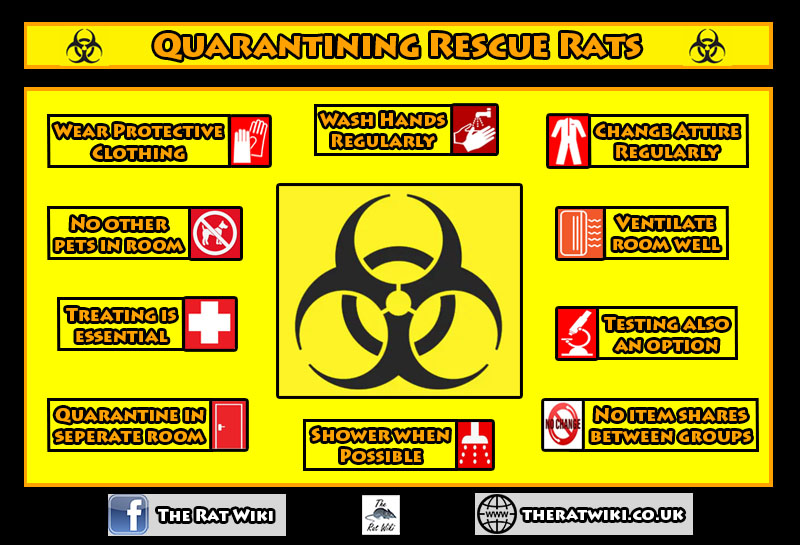
Once you have them safely in a cage you need to get them somewhere warm and safe but also a place where you can quarantine them for 2 weeks. The best place to take them is somewhere with no other animals in the house. It’s a big ask but if there is a family member close to you or a friend that’s a pet free home and they have a spare room this would be ideal as it greatly lowers the risk of anything getting passed between other animals. If you have to have them at home then having them in a spare room as far away as possible from other animals is best. An upstairs office or a spare bedroom being the best. Keep the doors closed as much as possible, consider a draught excluder on the doors to limit air flow between the quarantine room and the rest of the house and keep windows open often to let in plenty of fresh air. Try not to keep them in conservatories, garages or sheds either, especially in particularly hot/cold weather as this could make them get sick or even possibly pass away.
The biggest thing to remember is Hygiene is absolute key here. Wash hands at every point you can. If you touch the rescue rats, the cage or anything in or around it make sure to not touch your face and wash hands immediately. Having a spare change of clothes when you are in the quarantine area is also advised so you can keep a clean set for when you are out of there. It may be a bit of a pain but changing in and out of clean clothes and washing hands often greatly reduces any chances of germ transfer. Showering after handling quarantined rats is also highly advised to further reduce chances of spreading anything around.
As well as keeping clean yourself you also need to make sure that nothing gets near or shared between your own animals and the rats being quarantined. This means no swapping items between cages especially if they haven’t been cleaned. Until they are safely out of quarantine I personally wouldn’t even risk giving items that have been cleaned to others if they have been in contact with the rescues until they have been treated and are safely from infection. If washing items from both groups make sure to wash your own rats stuff separately from the ones being used with the rescues. No other animals to be in the quarantine room at any point either even if supervised, viruses can be spread by airborne droplets so direct contact isn’t needed to infect other animals sometimes. It’s just not worth risking. I would also visit/interact with your own rats first as you know they are clean and free from infection then see the quarantined rats second. This way you can change, shower and then not have to go straight back to your own rats meaning you reduce chances of spreading anything to them.
Keep all these measures up until treatment is complete or if tested then wait for a negative result to confirm. Treatment is usually a 2-3 week course of antibiotics, Ivermectin doses and Panacur can be used as well. Panacur isn’t essential as the Ivermectin will cover the treatment of most of the common internal and external parasites. Testing can be sorted out from your vets quite simply and usually comes in the form of urine or faecal samples Treatment is heavily advised and is usually very low cost so well worth doing. Testing is more for people wanting to show rats so not essential to pet homes whose rats stay at home but if you want to test for peace of mind you’ll be looking at around £90-120 for a test. That’s per test (e.g. A Leptospirosis test which covers multiple samples all at once) so don’t worry it won’t cost you that per rat. Prices for tests will vary depending which lab you use to do the testing and what you want to test for so make sure to check the price before requesting a test kit.
Once you have treated successfully and you haven’t noticed anything of obvious concern with the rescue rats it’s time to end the quarantine. They are now safe to join your existing group or be re-homed to a new forever home.
I hope that clears a few things up for people on the process in general. As I said at the beginning I know how daunting this can be if the situation is suddenly presented to you so getting to know the process before can really help get you prepared if it’s something you want to help out on if you ever need to. Trust me when I say if you can help save a life and you are confident you can do it safely go for it. There is no better feeling that seeing a rat safe and sound from your own rescue efforts. They all deserve this chance so good luck to anybody wanting to help out in any way they can.
Stay safe everyone!
 The Rat Wiki