
The unfortunate thing we have to get used to as rat owners is the fact you will likely experience your fare share of medical dramas with them throughout their lives. They can be quite clumsy so things like skin tears and pulled nails is to be expected while also having your fair share of medications to administer for the various things they could need treating for. Also as much as you hope it doesn’t happen sometimes more nerve racking things like surgeries wether planned or un-planned have to be expected.
With that in mind being able to plan ahead and make sure you have everything you need to treat them as best as possible in different medical situations is always a good thing to prepare for. Some things can be home treated and there are many items to keep in the house that can help with this whereas others will need to be look at by a trained professional. Obviously if in doubt it’s always advised to go see a Vet if you are not sure but this doesn’t mean you can’t keep in basic first aid supplies to treat them before you get there. In some cases the vets might even advise you use certain items to help.
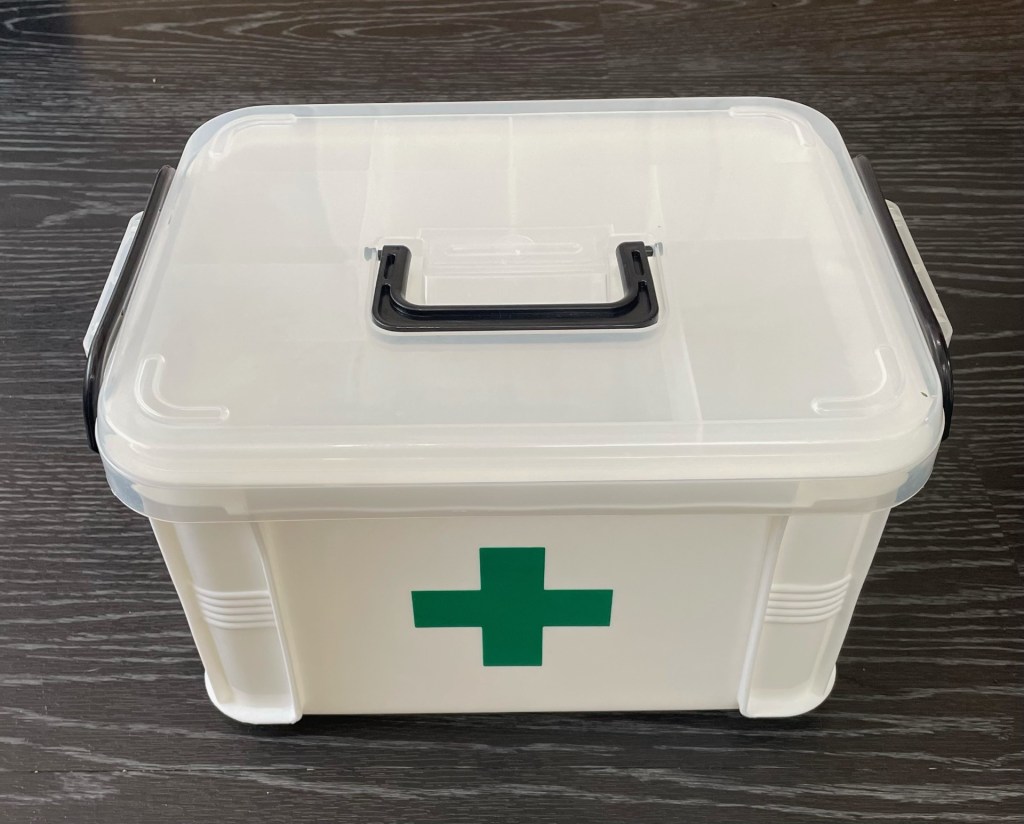
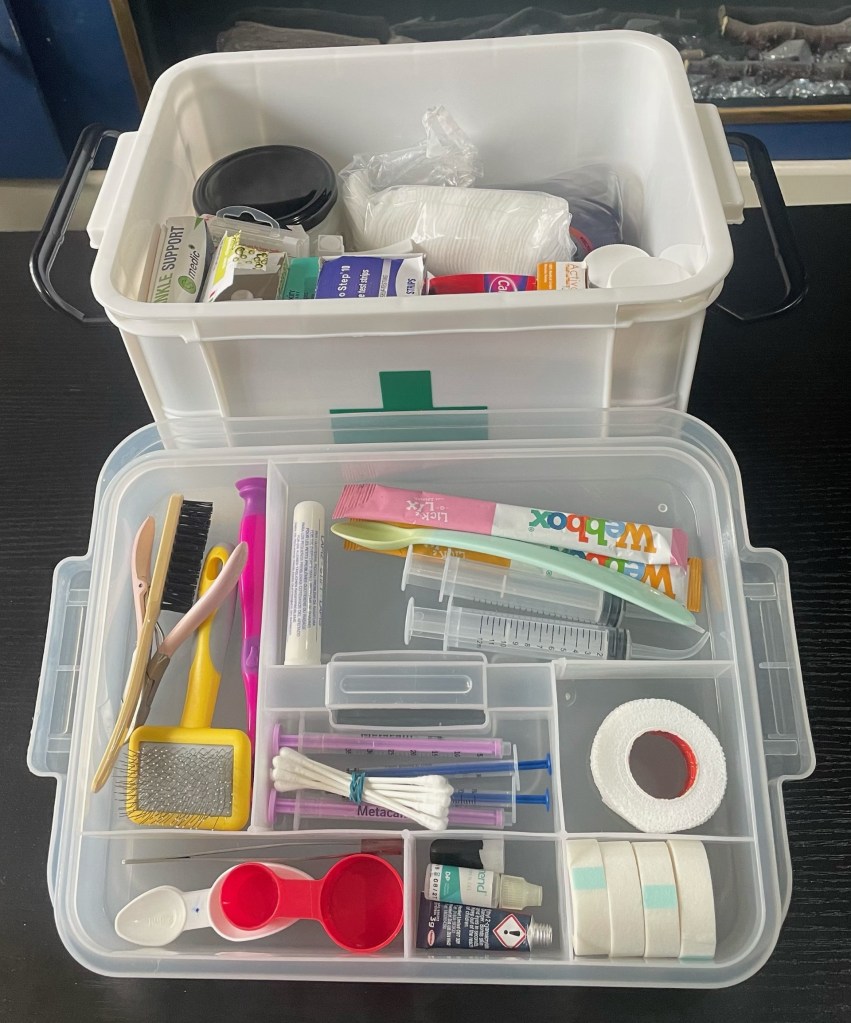
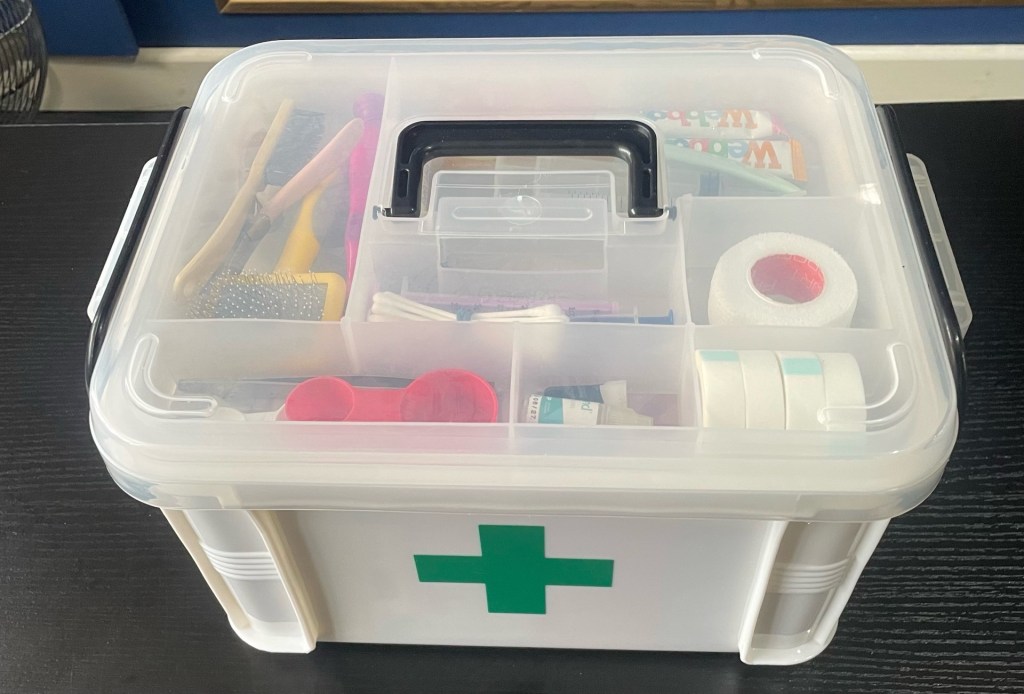
So below is a full guide on what I think needs to be in a rat first aid kit. There are many different items listed below, separated into categories and a small explanation of what each one is for, group pictures are included of all the items put together in my kit. All of these can be bought over the counter or online with no prescriptions needed. This guide doesn’t feature anything that is only available through a vet it’s purely a DIY kit that anybody can put together. Some items on this list do the same thing or roughly the same thing (Antiseptic Sprays for example) in which case I haven’t purchased them all but I have at least 1 example of each recommended item.
Medication and Weight Management
 Plastic medicine spoons (For administering medication)
Tasty Treats/Baby Food (To be mixed in with medication to get them treated easier)
Weight up baby/Moo Mix (Weight management and nutrient boost. Good to keep weight on older or sick rats)
1mm syringes (To administer medication and can also flush wounds out)
Pill crusher (Crushes pills and tablets so that medication can be mixed into food easier)
Kitchen scales (Keep track of rat’s weight. Knowing weights so you can properly dose medications)

Pain Relief and Preventative Treatment
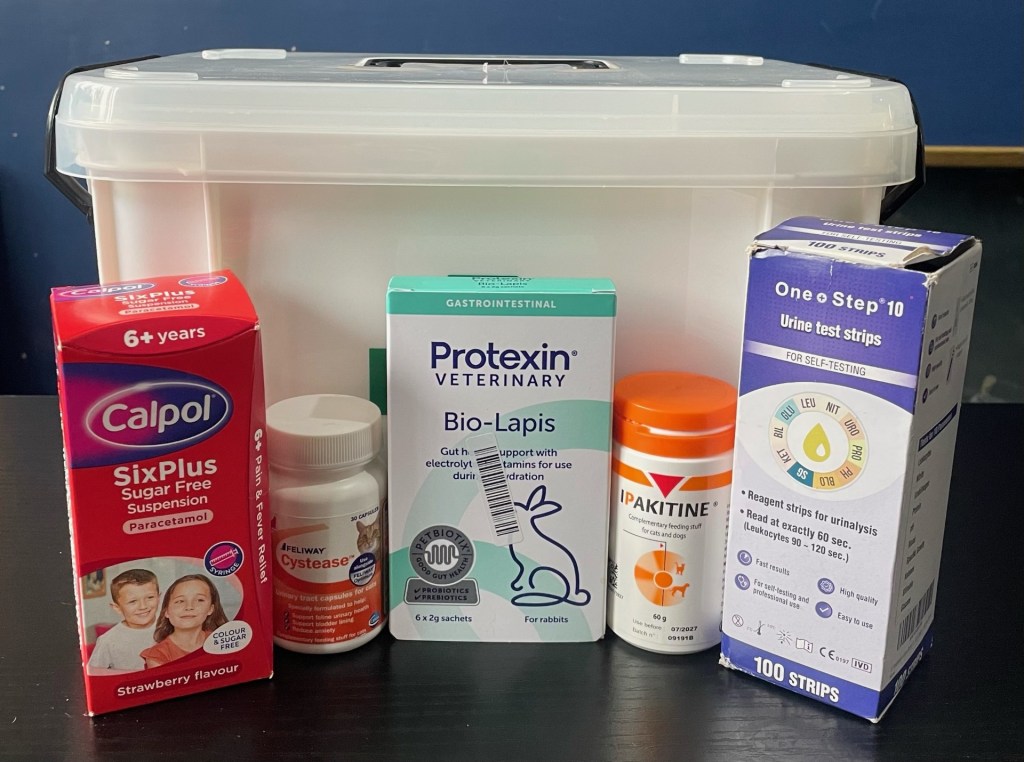
Calpol/Calprofen (Dilute to make pain relief in an emergency. Must get correct dosage before trying)
Feliway Cystease (Bladder support and helps with Cystitis)
Urine testing strips (Pee testing for many things but most commonly in rats things like UTI’s and kidney problems)
Probiotics/Bio Lapis (Given to rats with upset bellies and those on antibiotics that are causing the runs)
Ipakitine (kidney support)
Wounds and Infections
Hibiscrub (Antiseptic wash used to treat minor infections like infected tail scales. Needs to be diluted)
Gold label purple plus spray (Chlorohexidine spray is antibacterial and used to treat cuts and wounds)
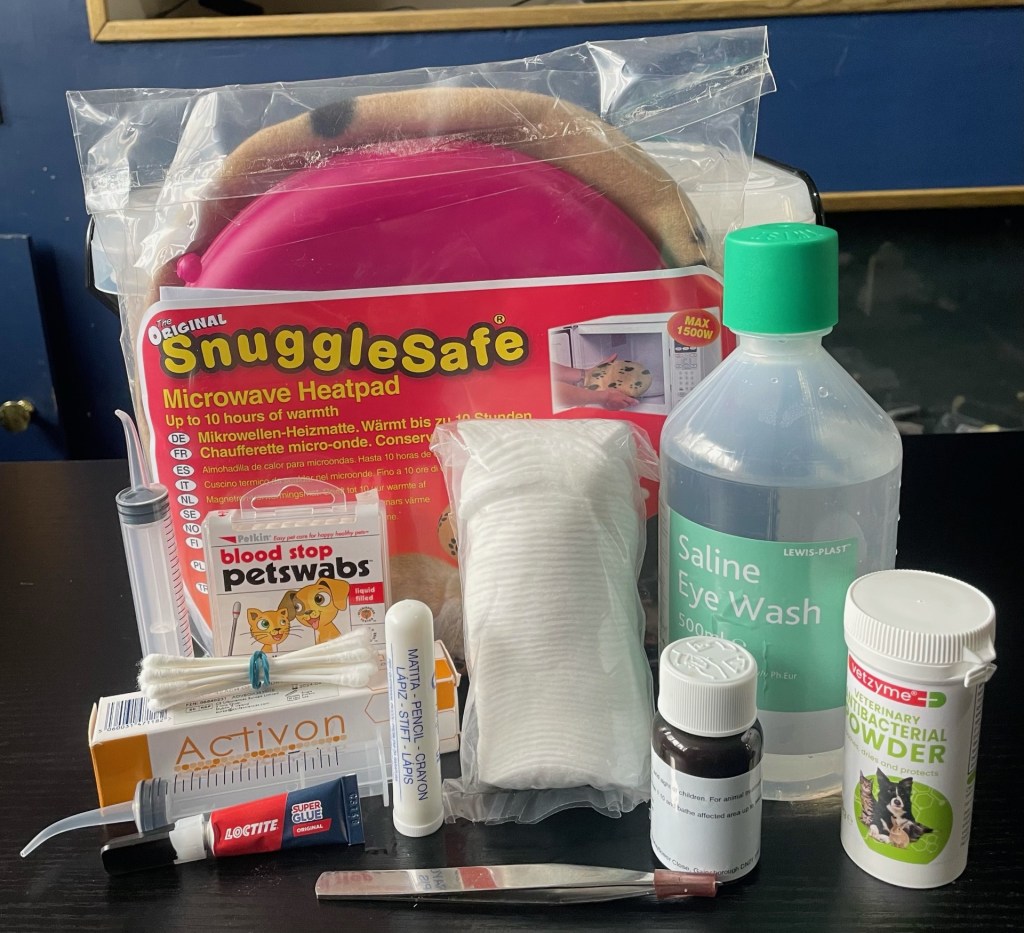
Antibacterial powder (Dry dressing for abrasions and minor wounds. Good to treat cuts, bites and scratches)
Derma gel spray (Keeps cuts and wounds clean and free from infection)
Styptic pencil/powder (Good for stopping bleeding. Useful for ripped out toenails or nails cut too short)
Blood stop pet swabs (Good for stopping bleeding. Useful for ripped out toenails or nails cut too short)
Intrasite gel (Used to promote healing of a wound, manage a wound site and keep it clean)
Saline solution (Either readymade in containers, solution in readymade syringes or you can make your own)
Curved tip syringes (Better directions for flushing out wounds. Not essential but handy to have a couple available)
Superglue (Temporary emergency wound repair)
Manuka honey (For treating wounds due to its Antibacterial, Anti-Inflammatory and wound healing properties)
Cotton buds/Pads (Cleaning out wounds or abscess sites, applying treatment more precisely)
Tweezers (Precise picking for things like substrate stuck in wounds)
Post surgery
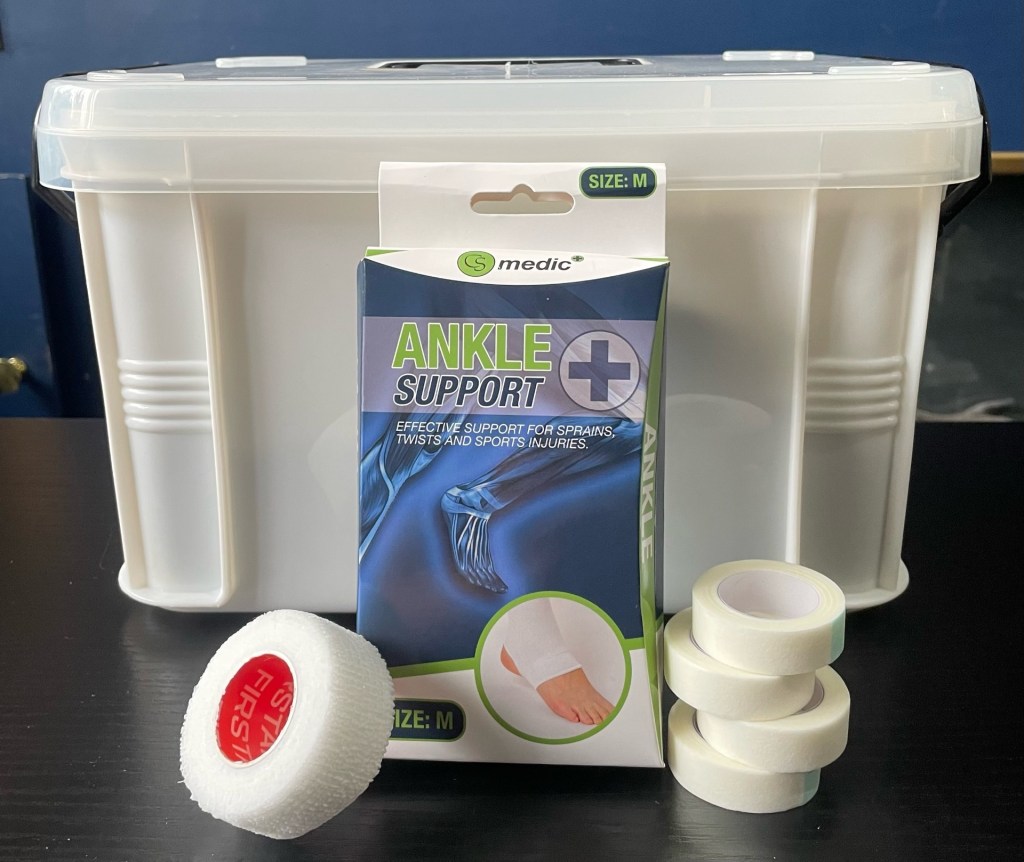
Cohesive bandages (used to cover post surgery wounds to stop the rat getting to surgery sites and disturbing them)
Ankle support tubes/Tubigrip (Stops them pulling bandages off)
Medical tape (Keeps bandages in place and peels off gently and safely)
Heat mat/Snuggle Safe (A Microwaveable heated mat to warm up a rat when it’s sick. Falling body temp when sick can be a problem so this will help with that)
Ears and Eyes
Ear cleanser/Wash (Flushing out the ears to remove debris. Good to consult a vet before use)
Ocry-Gel (Lubrication for eyes. Great for naked rescue rats prone to eye problems)
Remend (For treating and lubricating the eyes. This is good for eye abrasions/ulcers)

Skin Care and Show Prep
Tea Tree skin cream (Used to treat itchy and inflamed skin. Can also discourage barbering fur)
Leucillin Spray (Antiseptic spray good for treating skin infections. Recommended for staph infections but could need something more powerful for true staph)
Lamisil (Athletes foot cream to treat things like ringworm in rats)
Coconut oil (Good to encourage grooming especially in bucks when grease starts to build up. Also good to apply to dry skin)
Fine comb/Brush (For un-matting coats and helping groom older and sick rats)
Nail clippers (Keeping claws blunter can stop scratches to others. Particularly handy during intros)
Toothbrush (For tail cleaning/Show prep)
Scent free/Sensitive Antibacterial Hand Wash (For tail cleaning/Show prep)

Parasite Treatment
Panacur (Treatment for worms)
Harka-Mectin (Used to treat lice and kites. Easier to apply than Beaphar which needs a lot more applied at once)

Other
Inhaler in a toilet roll tube (Not everyone can get hold of this but if you can very handy in case of an emergency. Just squirt into the rats face and could help them breathe better until you make it to the vets)
Hope this helps everyone. If you wanted to try this yourself you can put in as much or as little as you want. Even a basic kit with very cheap items in is a good place to start. You never know when you will need it but will always be happy you did if you can help your rats out when they need you.
 The Rat Wiki