

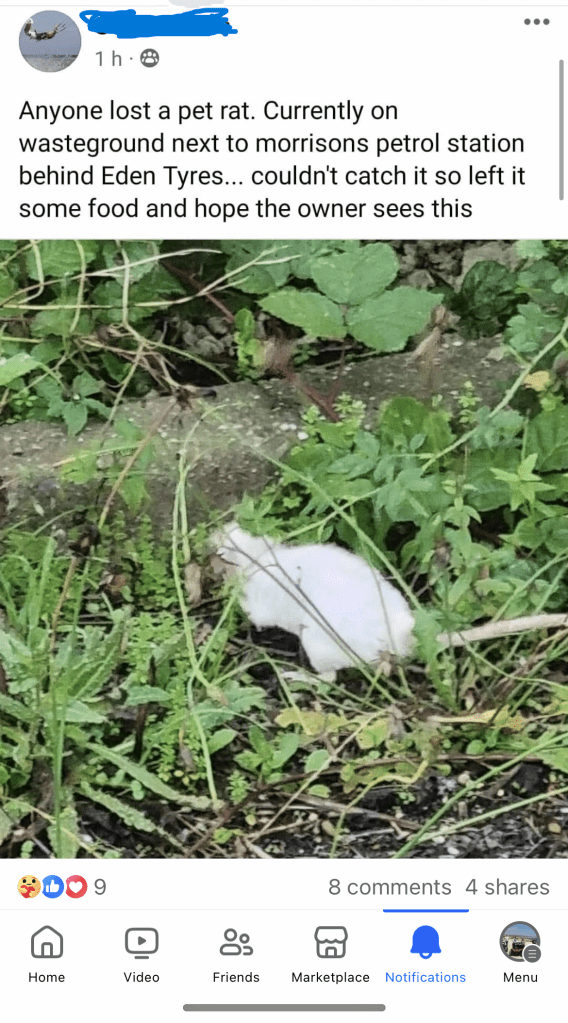
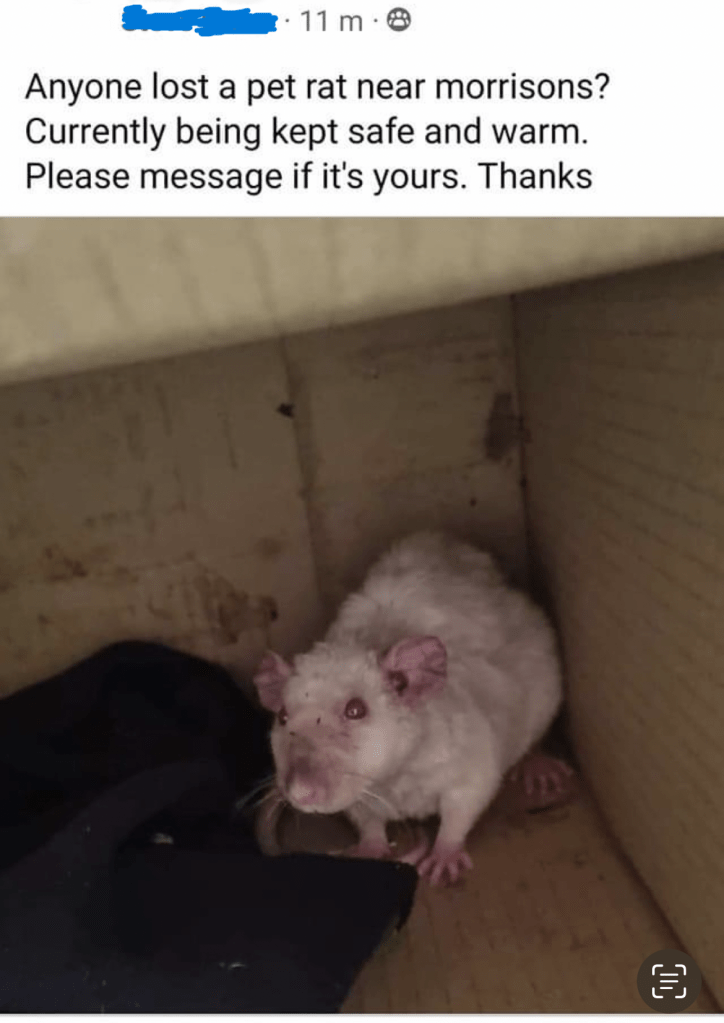
Ever been scrolling through Facebook and came across a post on your local towns group page about some abandoned rats having to fend for themselves in the wild and wanted to help but not sure how to do it? Unfortunately it is a thing that happens quite a lot and not necessarily always deliberately, sometimes accidents happen and people’s beloved pets escape their home which is unbelievable stressful. So if you happen to come across a situation where you can intervene and help out it’s best to know exactly what to do, whether it’s having a small part in it or taking them on yourselves. Here I will run through a few ways you can make a difference in rescuing these rats from the terrible situation that is finding themselves loose in the outside world.
Identify
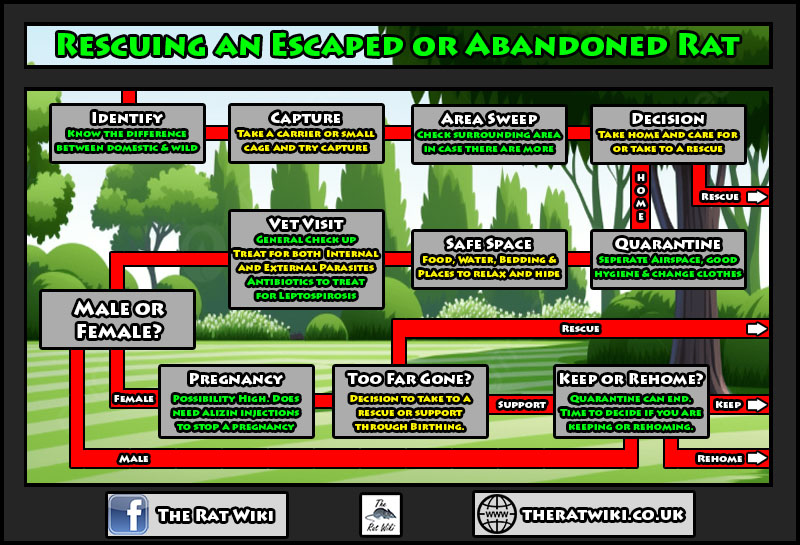
Firstly, it’s good to know the difference between a wild rat and a domestic pet rat. In the UK nearly every wild rat you’ll come across will be Agouti coloured. This is the dark brown colour rat with black ticking on its fur and a grey belly. There are possibly rare strains out there that will be different such as albino etc but most of the time wild rats will be agouti coloured. They will also not be very comfortable around humans so you’ll know it’s likely wild if you don’t see stick around for long. The only exception would be a wild rat that has been poisoned. These will seem very relaxed and happy to be handled but the sad reality is that it’s likely to be dying. If you are unsure there is nothing wrong with keeping it comfortable, offering food and water and waiting to see how it does. If it’s still with you the next day you’ll likely have a domestic agouti rat that has either escaped or been dumped. Wild rats will also have standard top mounted ears only as well as a normal coat so if you see a dumbo rat outside or a rex for example these will not be wild rats either. I’ll leave a picture below of a standard top eared agouti rat and you can also check out The Rat Wiki Differences In Rats guide which will help you to familiarise yourself with all the ways Domestic Fancy rats can differ from wild ones.

Capture
Now you know what you’re looking for you can attempt to catch the rat out in the wild and get it to safety. If it’s tame and approachable then you can try picking it up but I’d take some thick gloves just to be sure. Even the nicest of rats can bite as a reaction when they are scared so protect yourself for now until you know how they will react to handling. It’s also a good idea to check the surrounding area where you find the rat In case there are more around or if there are any dependants such as smaller babies. From this point you need to decide what to do next, either take it/them home and care for yourself (whether permanently or temporarily until you can find a home) or take it to a rescue for them to sort. If you decide that a rescue is best there is a big list of rescues who have taken in rats before which can be found HERE. You can also search for ones in your area there are bound to be some who are willing to take in rats or at least might know of someone who does. I personally would avoid handing them in to the vets as I would be worried they would be euthanized. I’m not saying this is what all vets do I’m just not totally sure on the procedure here with vets so would want to avoid a possibility of this. Plus it’s always better to take directly to people who can get them settled and properly rehomed rather than loading them onto vets who have a job to do.
Quarantining
If you decide to take them home you need to follow strict quarantine procedures with them as being out in the wild they may have picked up parasites as well as viruses they will need treating for. This means keeping them in a separate room from any other animals and maintaining good hygiene when handling them. Something like spare bedroom or office is usually a good place for this if you have them. A change of clothes is also a good idea for extra safety as you can swap between when touching and handling them.
For a more in depth guide on the Quarantine Process please see The Rat Wiki’s Quarantining Rescue Rat’s Guide which will take you through everything you need to know to keep everyone safe while the quarantine process happens.
They will likely be quite scared from their ordeal outside so setting up a hospital cage with some places to hide and feel safe is really beneficial. Putting in some bedding for them to hide in like shredded paper or hay/straw will also help make them feel more at home. At this stage it’s also good to visually judge their body condition and weight. Scatter some food down for them and give them a bottle and bowl of water if possible. A bowl is also good cause they might want to have a wash in it after being outside. If they are looking underweight then giving them some extra protein to bulk them up is a good idea, alternatively having some weight up baby or moo mix in is great for situations like this.
Treatment
Now you have them safe and comfortable it’s time to think about getting preventative treatments for them for parasites, viruses and if female, possible pregnancy. First let’s cover parasites. They will need treating for both internal and external parasites. External parasites found in rats is usually lice and mites. Fleas from other animals are usually species specific but can feed off other animals so these are not to be ruled out. All can be treated at home quite easily by using a Ivermectin or Selamectin based product. The best I would recommend is Harka-Mectin. It’s a product designed for pigeons but works well on rats too. Beapher spot on treatment is another option but requires a lot more applying and can “soak” the rats a bit so I would prefer Harker-Mectin. Instructions on how to use and a dosing guide to rats can be found HERE.
Internal parasites will be things like worms, bot fly’s etc. A common treatment for internal parasites with rats is Panacur which is a dewormer for dogs and cats. While this can be bought without a prescription I would advise letting a vet prescribe treatment and dosage instructions for this kind of thing. If you have treated the rat for external parasites with an Ivermectin or Selamectin based product however then this is sufficient enough as treatment for the common internal parasites like roundworm which is very handy.
Next the rat will need treating for any possible infections it may have picked up while being outside. The most common that will need preventative treatment is Leptospirosis. Also known as Weil’s Disease, this is a common infection in wild rats and is passed on through their urine, either directly or through infected soil or water. A good course of antibiotics prescribed by the vet should clear this up nicely. Make sure the rat completes the full course before finishing its quarantine period and as I’ve mentioned above strict hygiene and cleanliness while handling the rescue is key to protecting yourself and other animals in the house until treatment is finished. It’s very easy to keep everyone safe if you do this I do not want to give people the impression it’s hard or dangerous to bring in a rescue who has been outside or to put people off from this, however, protecting the kind people who are willing to help and their animals is also a goal of mine so it’s worth mentioning a lot.
The final part of the treatments only applies to rescued Doe’s (Female Rats) and that is preventative treatment for pregnancy. It may be highly likely that if out in the wild for a period of time the Doe will have come into contact with a wild male rat who may have gotten her pregnant. Depending how far gone the rat is you can get them treatment for this which will allow them to re-absorb the pregnancy. The best thing to give for this is something called Aglepristone, with the most common brand name being named Alizin. This requires two injections giving at 24 hours apart and this will successfully end a possible pregnancy in the female if done before the 12 day mark of pregnancy. Treating after this can still work but isn’t guaranteed especially at the later stages. If a vet tries to treat with something called Galastop I recommend either asking for Alizin instead or getting an opinion from another vet, one who is either more exotics based or who has better knowledge of rats as a whole as Galastop is not as successful in ending pregnancies. It is also not recommended by the BSAVA exotics guide and they specifically advise against using it for terminating pregnancies in rats.
If however it turns out the pregnancy is too far gone and the doe will need to have the litter then again another decision has to be made whether you are happy to keep her and look after them during the entire process or again take to an experienced rescue and have them take care of them. If you plan on keeping mum and are happy to go through the birthing process it’s always a great idea to do as much research first so you’re prepared and know the process as best as possible. Raising a litter by Lurelin Rats is a great guide which is aimed to talk people experiencing an “oops Litter” (basically an unplanned pregnancy) There are lots of useful tips in there to help you through the process. Also there are some great guides over on the Breeding section of The Rat Wiki which, although mostly designed for planned breeding you can still see things you’ll need to know like kitten growth and the things to expect from birth to homing ages. Two great Facebook groups you could join are Rat Care UK and Rats UK:Help dont criticise which have lots of helpful people that will be able to help advise you in every situation.
Forever Home
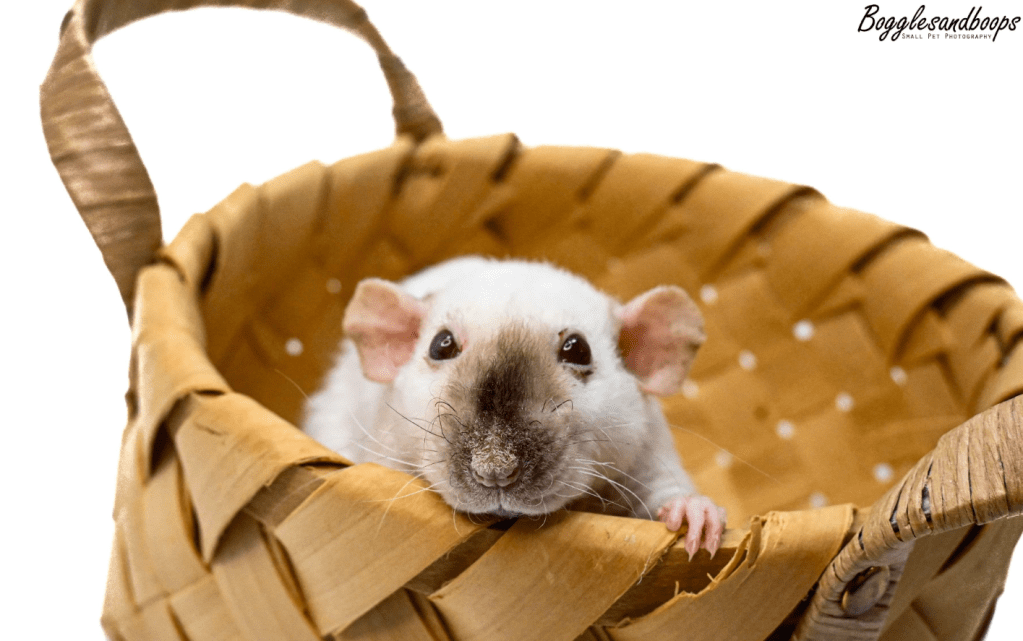
Once fully treated and after the quarantine period has ended you can then look at finding them a forever home. You can either decide if you want to keep them (if it’s a possibility for you) or look at rehoming them through a good resource. If you want to keep them then it’s just a case of introducing them into your group. Be aware they might slip straight into the group completely fine during intros but as you don’t know their backgrounds and temperaments be fully prepared intros could be a little difficult so might need to be monitored a bit more. Hopefully that isn’t the case but it’s better to be prepared nonetheless. Again it’s lovely to help out a rat in need and do all you can for them but protecting the happiness and welfare of your current group is always top priority as well.
That about wraps up everything you need to do with rescuing a rat found out in the wild. Just remember no matter how small a part you play in this whether it’s catching it and taking it to a rescue or taking it all the way to housing it in your own group of rats you’ve made a big difference to a vulnerable little rats life. It’s likely a domestic rat wouldn’t last long in the wild so taking them off the streets along makes a huge difference. Just remember to protect yourself when handling, keep as hygienic as possible until treated and if you do decide to keep them be patient. You don’t know what they went through before you picked them up they make need some extra time to trust you and feel safe so take it one day at a time with them. They should get there eventually.
 The Rat Wiki