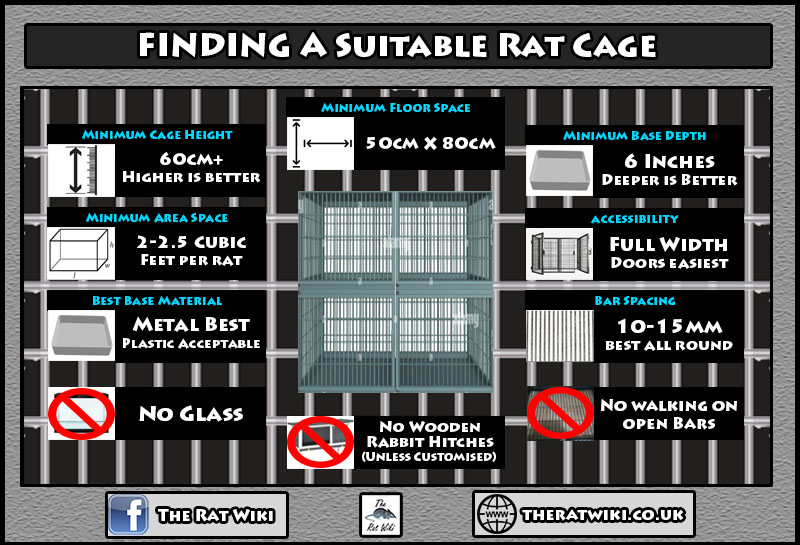
After doing lots of good, solid research beforehand on rats and rat keeping one of the first things you have to do next is look at finding a suitable home for them. This will be the place where they will spend most of their lives so getting it right is very important. You don’t want your new pets to have to live in something that’s unsafe or too small or even something that’s easy to escape from. It’s not just getting a good cage for them that’s important too. You’ll be responsible for the cleanliness and upkeep of their cage too so having something that’s hard to do anything in can cause frustration and misery making you wish you had tried something else. If finding a good cage is stressing you out don’t worry, here I will take you through all the things you need to look for step by step and explain why each one is important to have for you and your rats.
Minimum Floor Space
80cm x 50cm
There is a bit of a common misconception that height is more important in a rat cage than floor space which just isn’t true. Yes they may not be on the floor for most of the day but when they are they need enough room to move around freely. Imagine being in a tiny prison cell with nowhere to move around but the room is really tall so you can climb. Not being able to move around much would drive you crazy and it’s the same for rats. For this reason it’s been agreed by most good rat keeping sources out there in the community that a minimum floor space of 50cm X 80cm. This is a good standard to stick to and provides enough space for a couple of rats to all be on the ground level together and to be able to move around freely. It’s also a good enough space to scatter food on at feed time and encourage natural behaviours by letting them forage for their food. Going bigger than this minimum is of course encouraged and the bigger the floor space the larger number of rats you can keep in their more comfortably.
Bar Spacing
10-15mm
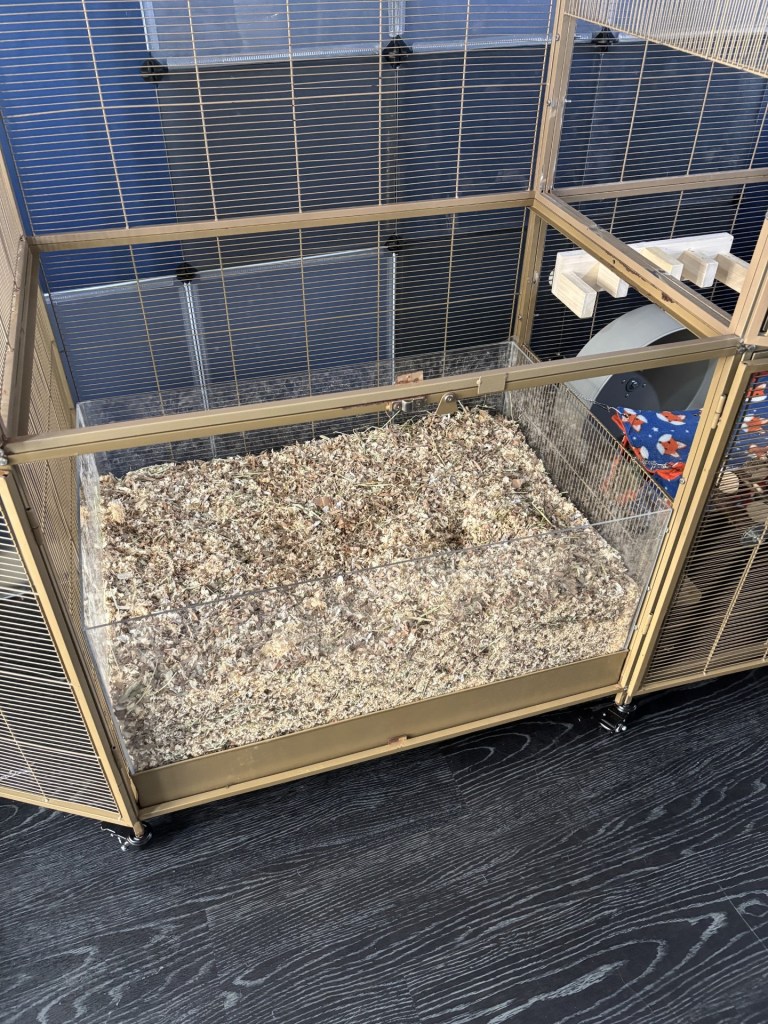
You will find a few cages out there that are 9mm bar spacing which is fine but in general most popular and widely used rat cages are between 10 and 15mm wide. You can go bigger than this, especially with large adult bucks but the more you increase the bar spacing the greater the chance of your rats escaping. You may not realise this but they are escape artists and can fit through the most ridiculously small gaps that you wouldn’t believe. Small does and kittens can find it really easy to escape cages with smaller bar spacing so it’s always good to stick to the maximum of 15mm rule. Some people buy/acquire cages with larger bar spacing and then use mesh wire to wrap around the cage to try and make it safe. This is an option and certainly will work however you really need to use good quality mesh which can be expensive. Cheaper mesh risks sharp edges on the wire which can cause injuries to your rats. I’d fully recommend putting the extra cost of the mesh wire towards buying a better cage. It’s much easier and safer this way and you can pick up great rat cages for much cheaper than you think.
Cage Height
60cm+ but the higher the better
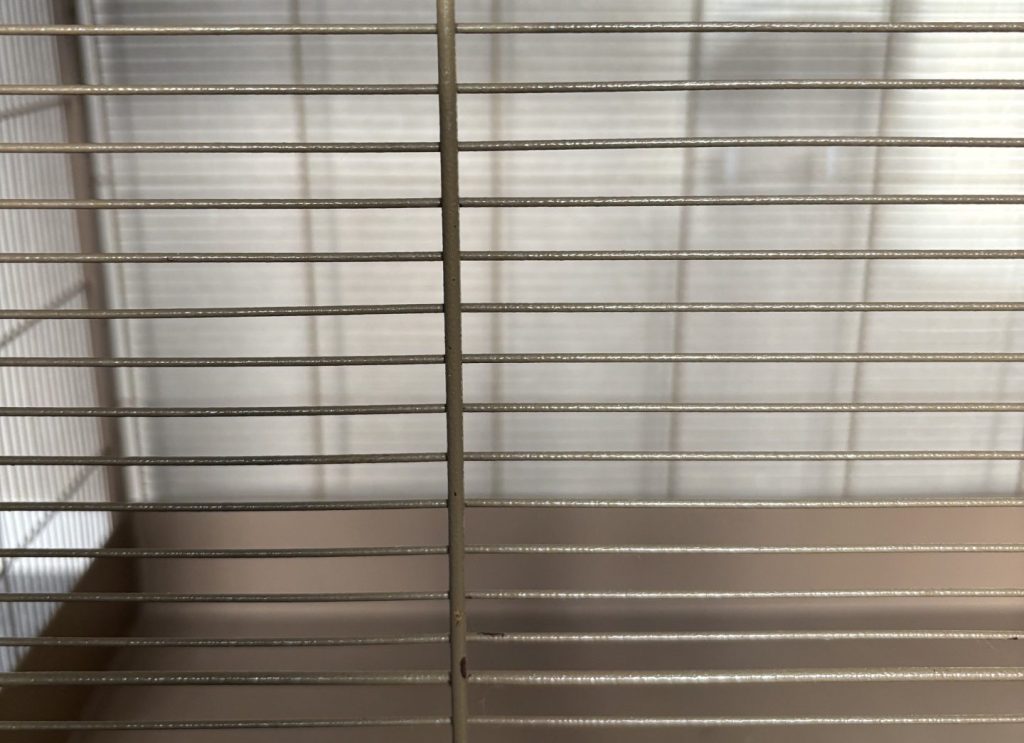
As stated before maximum height isn’t the most important thing in a cage but it is still something you need to consider. Rats are natural climbers, jumpers, balancers and explorers so having a cage setup to challenge these natural behaviours is very beneficial not only for their physical health, but also their mental health too. It could be hard to have a challenging setup like that in a smaller, flat hamster style cage so getting a cage with a bit of height is very beneficial. For this I would say a minimum of around 60 tall is best to aim for but if you have the space available feel free to go higher for this. Especially if you want bigger groups eventually as you’ll then have enough space to add more rats in gradually. Rats usually prefer to sleep as high up the cage as possible too as it makes them feel safer so getting something tall should help them settle into a new environment better.

Area Space Per Rat
2-2.5 Cubic Feet
This is purely a bit of a combination mix between minimum floor space and cage height so if you’ve hit both of those targets and have a smaller group of rats don’t worry for now it’s very likely you’ll have passed this target. Basically this is just a simple calculation which states what area space each rat should have by itself in a cage. So if we go by the minimum 2.5 cubic feet rule and your cage has 10 cubic feet of space then 4 rats can fit in there comfortably (10ft\2.5ft=4ft) This step is really handy for knowing how many rats each particular cage is rated for so you can plan ahead of time when buying. There is a cage rating on all cages that are featured on The Rat Wiki’s cages guide which should help you and if you want to calculate your own cage there is a cage size calculator which can be found on The Midlands Rat Club website.
Base Material
Metal can’t be chewed so much better than plastic
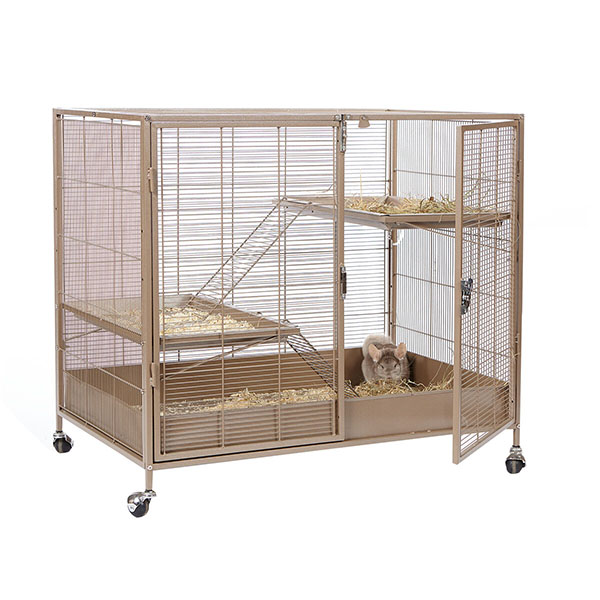
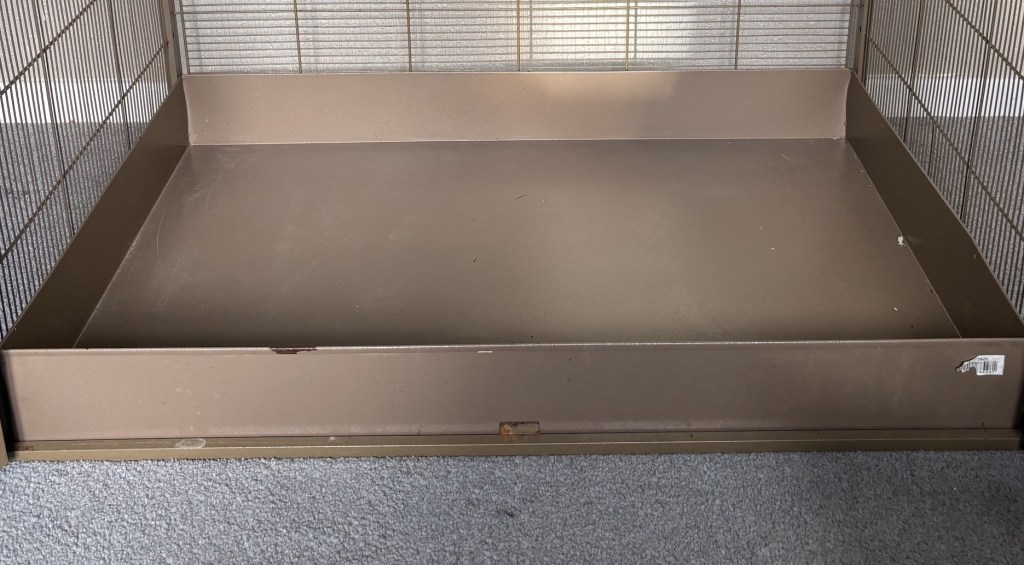
When looking for a base in a cage you really want two things. Depth and something escape proof. Most rat cages that are widely used nowadays have metal bases in which as good as these are the most reliable and can’t be chewed through. They are much longer lasting and easy to keep clean. However, with the exception of the Little Zoo Venturer, most of these bases are terribly shallow. Cages that come with plastic bases tend to be much deeper but have been known to be chewed through quite easily leading to escapes happening which isn’t ideal. This doesn’t always happen it always depends on the rats but if you want absolute peace of mind they won’t chew through the base then metal bases are the best option by far.
Base Depth
Ideal to have around 6 inches minimum
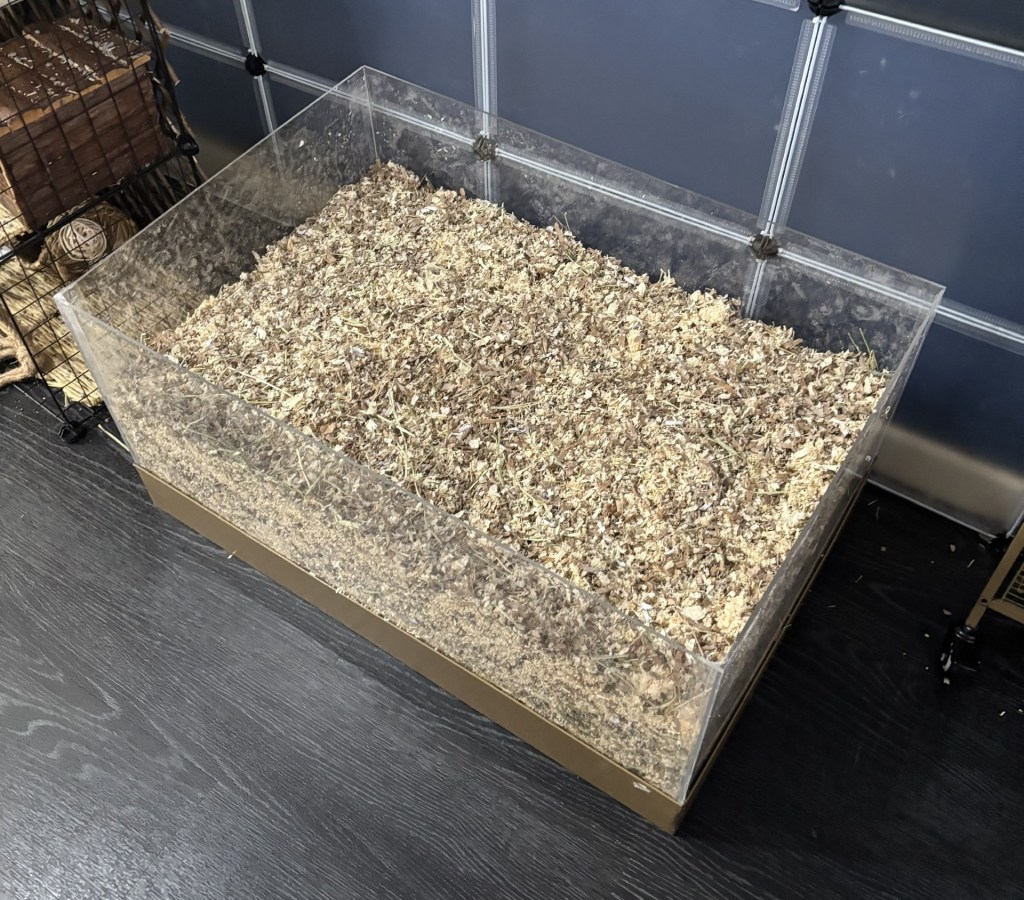
There are a few cages out there with deepish bases (Little Zoo Venturer being a prime example) but to get the best out of a rat cage you should really consider manually making your cage base deeper. This is a good idea because rats are fossorial animals and love to dig. Having a nice deep layer of substrate encourages natural behaviours and is very enriching for rats. You can make the cage base deeper a couple of ways. Some have found plastic storage tubs which fit perfectly into the bottom of the cage, some use plastic playpen panels and tie wrap to the cage and some custom make a deep base made out of Perspex and tape it together. All options work very well so if this is something you would consider doing your rats will be much happier for it.
Accessibility
The more access the better. Double front opening doors are the best
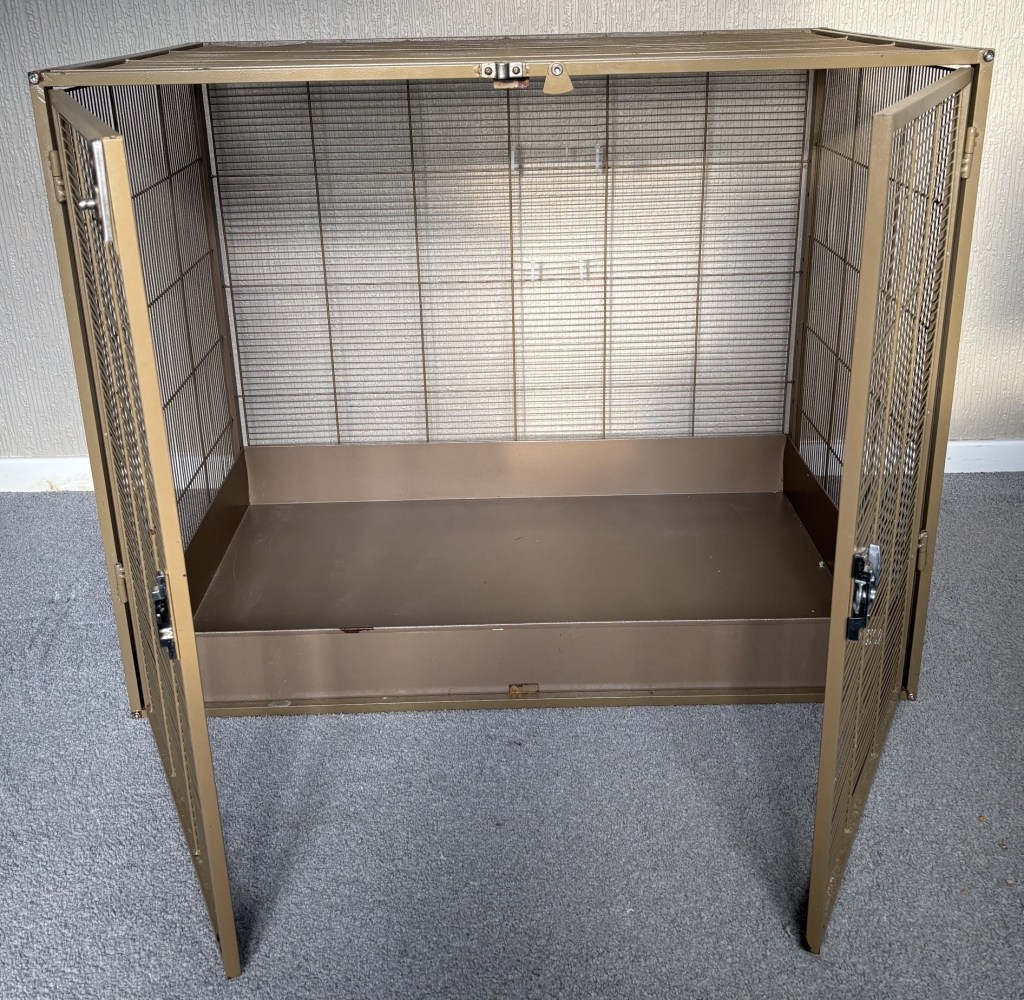
This is something a lot of people massively regret getting wrong the first time around and for good reason. You can find a great cage that you think will be perfect for your rats with good space and meets all the requirements a rat needs but the access doors are too small. Obviously this doesn’t really affect the rats too much. They don’t care how big their doors are but this is something that can affect you the owner a lot. I would recommend picking a cage with fully opening front doors on them. There are plenty of different cages out there that offer this and if not there are some that fully open at the top too. The reason why you want access is mainly for cleaning and maintaining the cage, being able to fully reach in and get to everything will make this process much easier. Plus being able to pick the rats up easily in the cage will be better for both you and them when you can get to everything much easier. Small doors can limit you massively and even if you can still reach everything it’s so much harder to do everything you need to in there with limited access. You won’t regret going for fully opening front doors on a cage I promise you.
So they are all the do’s to look out for in sourcing a perfect cage for you and your rats. Before we end this guide I just want to point out a couple of extra don’ts for you to bear in mind:
 Glass – Any enclosures containing glass aren’t recommended at all. Glass isn’t good for air flow and can cause the rats sensitive respiratory systems to get worse and potentially make them ill. Even half glass enclosures aren’t worth it, the more air flow you can get the better.
Hutches – This works on the same principal as the glass enclosures. Traditional hutches have little airflow so don’t work too well with rats. Being wooden as well they are easily chewed so can be escaped from easily. Plus wood soaks up urine and the smell of ammonia can cause damage to their breathing. There are some old school purpose built hutches some breeders have which have been made to suit rats better. They have much better airflow, the wood is sealed to stop urine soaking in and they are designed on the inside so rats can’t chew the wood. These are extremely rare though so not readily available for people to buy.
No Trays – some cages come without substrate trays or the trays are underneath bars like in bird cages. Asking rats to walk along bars is not only unpractical for rats it can cause injuries and infections as well as being unethical. If the bars cut their feet and get infected it can lead to nasty things like bumble foot. Also rats are fossorial animals who get a lot of stimulation from digging. They need a deep layer of substrate to be at their happiest so having a base is one of the most important features in a cage.
There you go that just about covers everything you need to know about choosing the right features in a cage. For a full list of recommended rat cages that are widely used head on over to the Cages Section now.
Just remember you don’t have to worry about buying a brand new cage if you are working on a budget. Brilliant second hand cages are available on places like Facebook Market place and there are great for sale pages too like Rat Stuff For Sale UK where you can often find some great cage bargains too